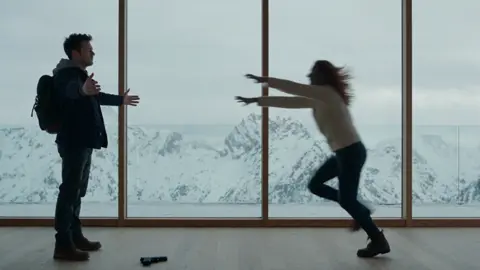
This reunion structure joins two movements on one composition. Match the ending of the cold encounter to the opening of the warm memory, then let the embrace happen after the cut.
The first segment stops a stride before contact. Its last frame becomes a warm-memory still with the same people, positions and direction. The second segment begins on that still, so the hard cut has something concrete to preserve.
01
Cold encounter
Use the two photos as identity references. End the first 12 seconds in a quiet, side-on two-shot: survivor left, returning loved one right, one stride before the embrace.
02
Continuity frame
Turn that final frame into a warm outdoor memory. Preserve camera height, framing, clothing, poses and the right-to-left motion. Only the setting and mood should change.
03
Warm memory
Start the final 12 seconds on the edited still. Continue the same run into the embrace, then let the scene settle. Join both segments with a clean picture cut.
Prompt set
Three instructions that protect the transition.
These prompts describe the same logic used in the generator. The short constraints matter more than piling on extra camera moves or visual adjectives.
Segment 01
Cold H3 scene
Image1 is the survivor. Image2 is the returning loved one.
Create a 12-second cold encounter. Image1 is the survivor and Image2 is the returning loved one. Keep both identities, faces, hair, apparent age, body shape, clothes and accessories recognizable. In a quiet blue-grey abandoned interior, Image1 recognizes Image2 and slowly opens both arms. Image2 runs toward them. End in a STATIC SIDE-ON WIDE TWO-SHOT at chest height: Image1 in the LEFT third facing right; Image2 runs from the RIGHT toward the left. Stop one full stride before contact. No touch, embrace, cutaway or change of direction before the final frame. No blood, wounds, gore, text, logos or watermarks.
Bridge frame
Warm-memory frame edit
The cold segment final frame is the composition reference.
Preserve the cold scene final frame exactly: camera angle, lens, framing, crop, character positions, scale, poses, hands, clothing, accessories and right-to-left running direction. Re-render only the setting and mood as a sunlit outdoor memory in a quiet wildflower meadow at golden hour. Use the two identity photos only to keep both people recognizably identical. The returning loved one is healthy, human and joyful. Do not add people, reverse movement, change clothing, crop either person, add text, logos, weapons, wounds, blood or gore.
Segment 02
Warm H3 scene
Use the edited warm-memory still as Image3.
Create the final 12 seconds. Image3 is the non-negotiable warm-memory start frame. The first frame must reproduce Image3: same side-on framing, camera height, screen direction, positions, clothing and running motion. Image1 stays on the left facing right; Image2 continues from the right, healthy and human. Continue that exact movement into the embrace, shared laughter, a hand-in-hand run and a calm held final wide shot. Stay in the warm outdoor memory for the entire segment. Do not insert the cold setting, a new location, blank frame, second cut or new conflict. No blood, wounds, gore, text, logos or watermarks.
Keep the join clean
01
Use one ratio for every source: 16:9 for a wide film frame, or 9:16 for a vertical social cut.
02
The pose at the cold ending matters more than any transition effect. Leave a full stride between the two people.
03
Do not change clothes, swap positions or reverse direction in the bridge frame.
04
Keep each segment to one location and one meaningful movement.
FAQ
What the prompt is controlling.
Why split the film into two 12-second segments?
A single instruction must otherwise invent a location shift, an emotional change and continuous character motion at once. The split makes the visible cut a controlled handoff between two matching compositions.
Which photo should be Image1 and Image2?
Image1 is the survivor and Image2 is the returning loved one. Use clear, separate photos where faces and clothing are easy to recognize.
Can I use 9:16?
Yes. Keep the same 9:16 crop for both segments and the frame edit. The side-on positions and the direction of travel still apply.
Why is the cut a hard cut?
A dissolve asks the model to invent an in-between world. A direct picture cut works because both shots share the same pose, framing and movement at the moment of the change.
Make the two worlds meet.
Upload two photos, choose the frame, and generate the 24-second reunion.